
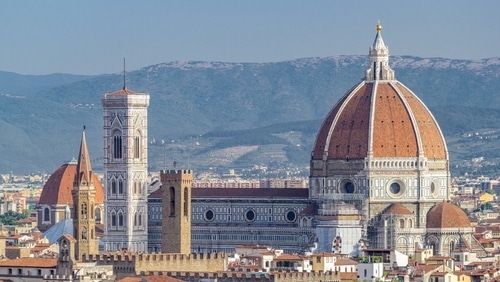
If you’re planning your first trip to Florence, the Florence Duomo — officially the Cathedral of Santa Maria del Fiore — is the ideal starting point. It dominates the skyline with its enormous red dome, fills the city with centuries of history, and delivers some of the most impressive views in Italy. This simple, practical guide is written especially for new travelers who want clear, stress-free advice on how to explore the Duomo the right way.
A Short History of the Florence Duomo
The story of the Florence Duomo begins in 1296, when Florence set out to build a cathedral that would outshine anything their rival cities could create. Over time, the project grew more ambitious. By the early 1400s, the city needed a dome big enough to cover a massive open space — but no one knew how to build one that large. Enter Filippo Brunelleschi, the brilliant mind who designed a revolutionary dome constructed without traditional wooden scaffolding. His double-shell masterpiece still impresses engineers and visitors alike.
The colorful marble façade that now defines the Florence Duomo came much later. The original medieval façade was removed in the 1500s, and for more than three centuries the cathedral stood unfinished on the outside. The modern façade was completed in the late 1800s in a striking combination of white, green, and pink marble, mirroring Florence’s Gothic revival style. Walking around the building is like moving through centuries of Florentine pride and creativity.
Exploring the Duomo Complex
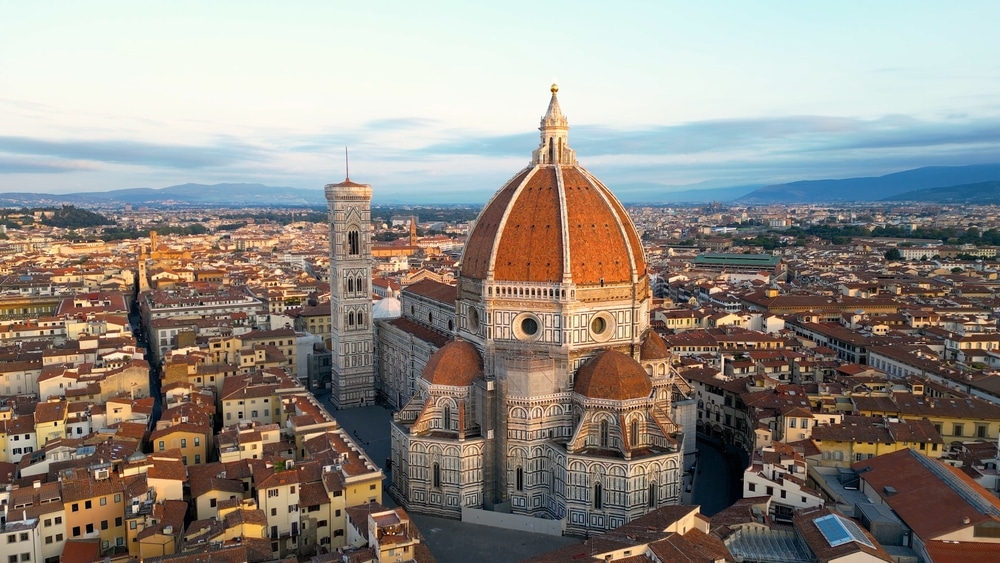
Most visitors don’t realize that “the Duomo” is actually a small constellation of important buildings. The cathedral itself is free to enter, but the Brunelleschi Pass grants access to the dome climb, the bell tower, the baptistery, Santa Reparata, and the Opera del Duomo Museum. Together, these sites trace more than a thousand years of Florentine art and faith.
The cathedral is the heart of the complex. Its huge nave feels surprisingly calm despite the crowds, with marble floors, high arches, and plenty of space to absorb the atmosphere. Above you, the inside of the dome bursts with color. Giorgio Vasari and Federico Zuccari’s massive frescoes of the Last Judgment swirl overhead, filling the vast space with dramatic scenes. Since this is an active place of worship, visitors must follow a simple dress code: covered shoulders and knees, no hats, and respectful behavior.
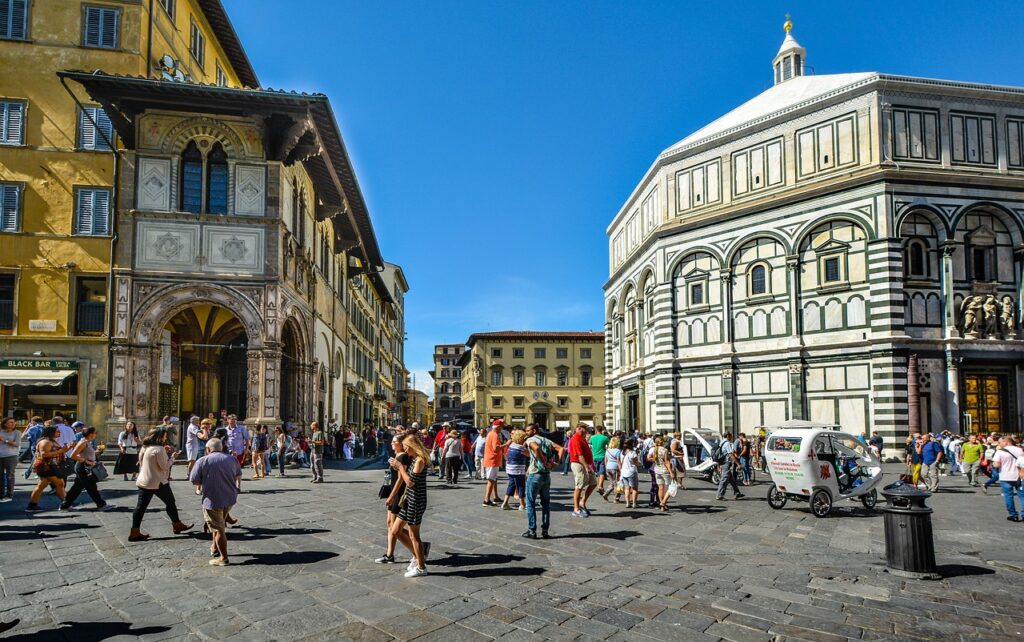
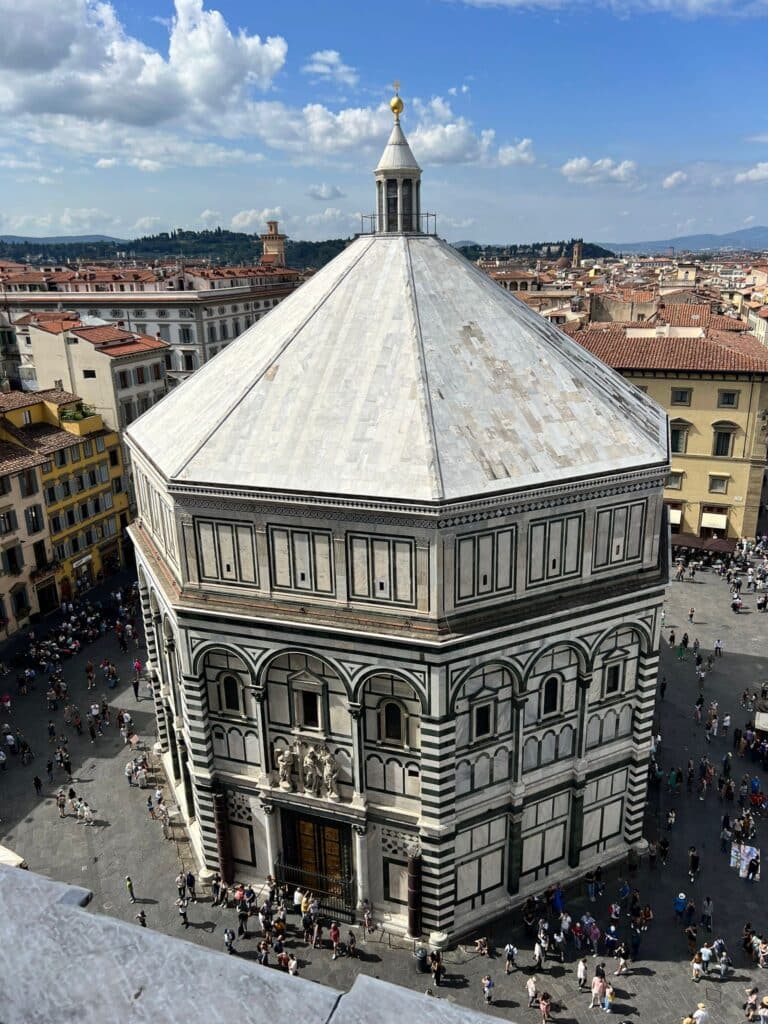
Nearby stands Giotto’s Bell Tower — tall, elegant, and climbable if you’re ready for 414 steps. Opposite the Duomo is the Baptistery of San Giovanni, one of the oldest buildings in Florence, famous for its bronze doors and glittering mosaics. And just behind the cathedral is the Opera del Duomo Museum, a treasure chest of original sculptures, architectural models, and the restored façade elements that once decorated the cathedral centuries ago.
Inside the Florence Duomo
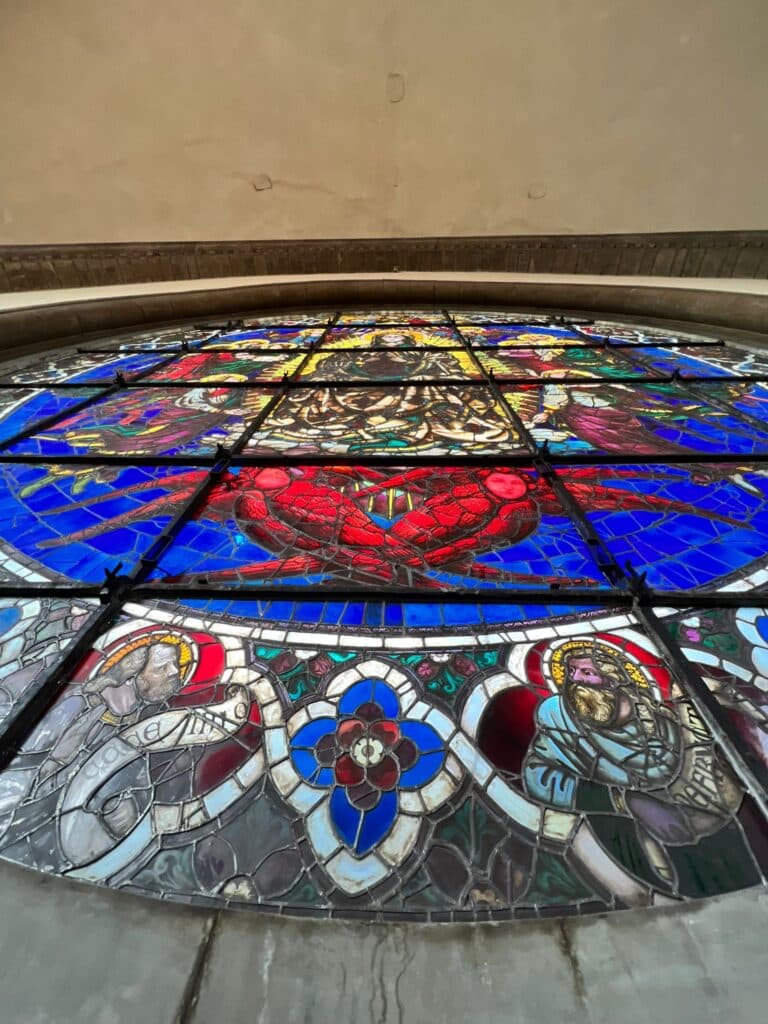
Stepping inside the Florence Duomo is a peaceful experience for many visitors. The design is surprisingly simple, allowing light and space to dominate instead of overwhelming decoration. This simplicity makes the enormous dome even more striking. Its vivid frescoes wrap around the interior curve of the dome, creating a colorful, dramatic scene that pulls every eye upward.
Below the main floor lies the archaeological site of Santa Reparata, the ancient church that once stood here before the Duomo existed. Exploring this area gives you an unexpected look at early Christian Florence, complete with mosaics and old stone walls. Remember that the cathedral is an active church, so modest dress, quiet behavior, and small bags are required.
Walking into the cathedral feels like stepping into a giant marble sanctuary. The interior is not overloaded with decoration, which surprises many visitors, but this simplicity allows the dome to stand out even more. The frescoes inside the dome are enormous and dramatic, painted over decades and showing hundreds of expressive figures. The cathedral also contains the remains of the ancient church of Santa Reparata beneath the floor — a quiet, atmospheric area where you can literally stand on layers of Florence’s past.
Because the Florence Duomo is a functioning church, there are a few things to remember. Bags should be small, phones silenced, and photography kept respectful. If you’re new to European cathedrals, it helps to know that appropriate clothing is required and staff enforce the rules politely but firmly. A little planning goes a long way toward making your visit smooth.
Hidden Details You Probably Wouldn’t Notice
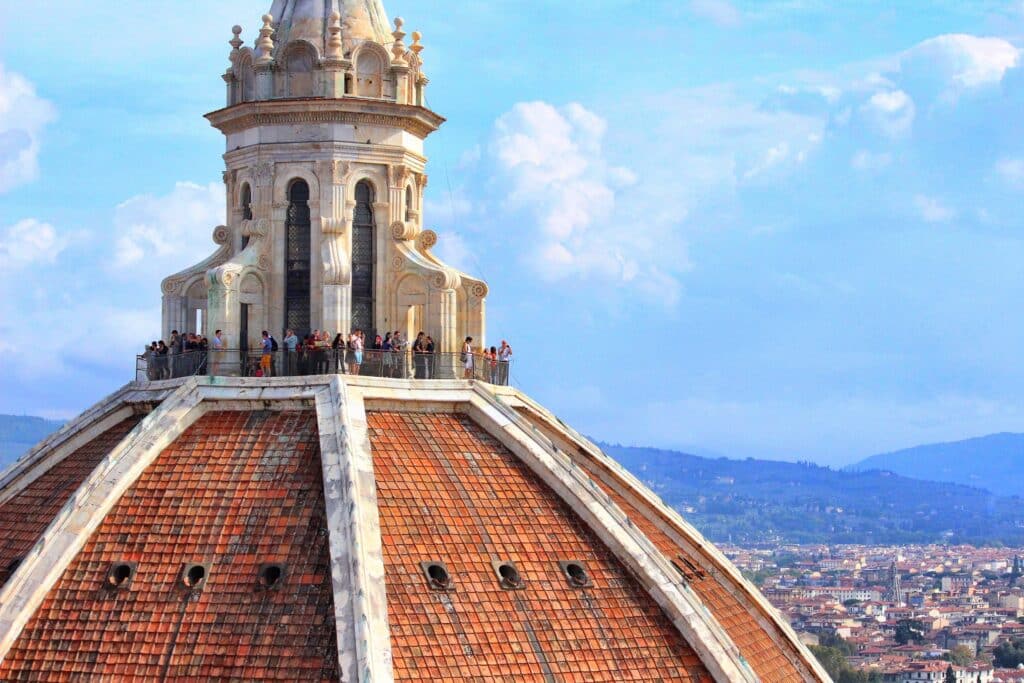
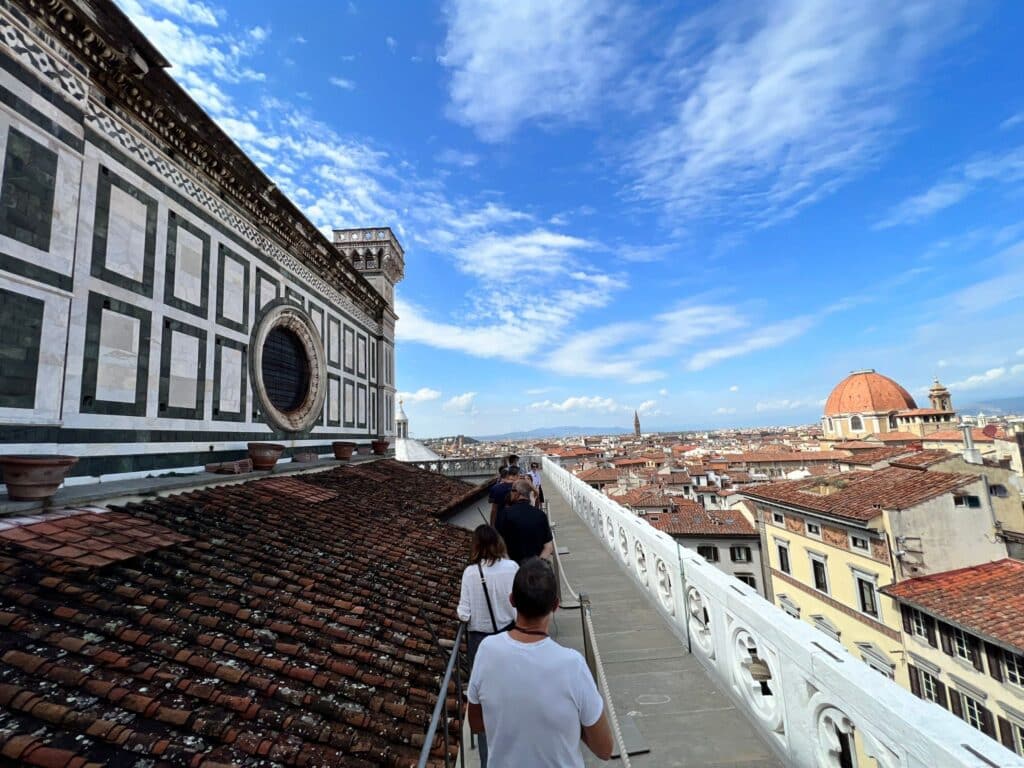
The Florence Duomo has several features that most visitors miss. One of the rarest experiences is the rooftop terrace hidden beneath the dome. It offers a close-up view of the marble exterior and a gorgeous panorama of Florence, and because access is limited, it stays surprisingly peaceful. If your tour includes it, you’ll enjoy one of the city’s best viewpoints.
Even more impressive is understanding how Brunelleschi built his dome. Without scaffolding, using a herringbone brick pattern, and with a double shell containing narrow stairways — it was an engineering revolution. Many visitors climb those same inner passages today without realizing they’re walking through history’s most daring architectural experiment.
New Visiting Rules for 2025
Starting March 1, 2025, the Florence Duomo introduced new rules that are important for every traveler, especially beginners. The Brunelleschi Pass is now fully nominative, which means you must enter your full name and nationality when purchasing it. Staff will check your ID before letting you climb the dome, and tickets cannot be changed or transferred once booked.
The dome climb now requires a reserved time slot, and these reservations are strict. Make sure your chosen time works with your travel plans because last-minute changes are not allowed. The climb itself includes 463 narrow steps and no elevator. If you have vertigo, claustrophobia, heart conditions, or mobility concerns, it’s better to enjoy the cathedral interior or the museum instead.
How to Plan Your Visit Without Stress
For a stress-free experience, start your day early. The cathedral opens in the morning, and arriving at opening time gives you a quieter moment inside the nave. After that, head to your reserved dome-climb slot and make the ascent while the day is still fresh. When you return to ground level, take your time exploring the baptistery, bell tower, and museum. If you’re visiting during warm months, consider saving the indoor museum for the afternoon when the heat intensifies.
If you only have a couple of hours, don’t rush the entire complex. Choose the cathedral interior and either the dome or the museum — both offer insight into Florence’s artistic legacy. If you have the whole day, move slowly and soak in the layers of history. Florence rewards unhurried travelers.
Tips to plan smart:
- Book your Brunelleschi Pass well in advance, especially in peak season — slots fill up fast.
- Bring an ID that matches the ticket name.
- Dress modestly (shoulders, knees covered) for the cathedral interior.
- Travel light if you plan the dome climb — bulky bags may be disallowed.
- Give yourself time: visiting the Duomo, the museum, the baptistery and possibly the bell tower can easily take half a day.
Final Thoughts
The Florence Duomo is more than a postcard image or a photo stop. It is a living monument: a layered story of ambition, faith, artistry, and human ingenuity. Visiting it with care — respecting the rules, dressing modestly, booking correctly — unlocks a far richer experience than you might expect: narrow stairs and dizzying views, quiet marble benches and soaring frescoes, rooftop terraces few see, and centuries of history above and below your feet.
Whether it’s your first time in Florence or your fifth, give yourself space to marvel. The Duomo deserves more than a glance.