There are places you don’t just visit – you grow quiet inside them. Notre-Dame is one of those places. Standing on the Île de la Cité, with the Seine curling around it like a slow-moving thought, Notre-Dame has watched Paris change for more than eight centuries. Kings have passed through its doors. Revolutions have shaken its walls. Bells have rung for celebrations, warnings, and mourning. And still, it stands — patient, familiar, unmistakably Paris. This isn’t a guide meant to rush you through checklists or overwhelm you with dates. Think of it instead as a companion — part story, part practical advice — to help you understand why Notre-Dame matters, and how to experience it in a way that stays with you long after you leave.
First Impressions: Approaching Notre-Dame
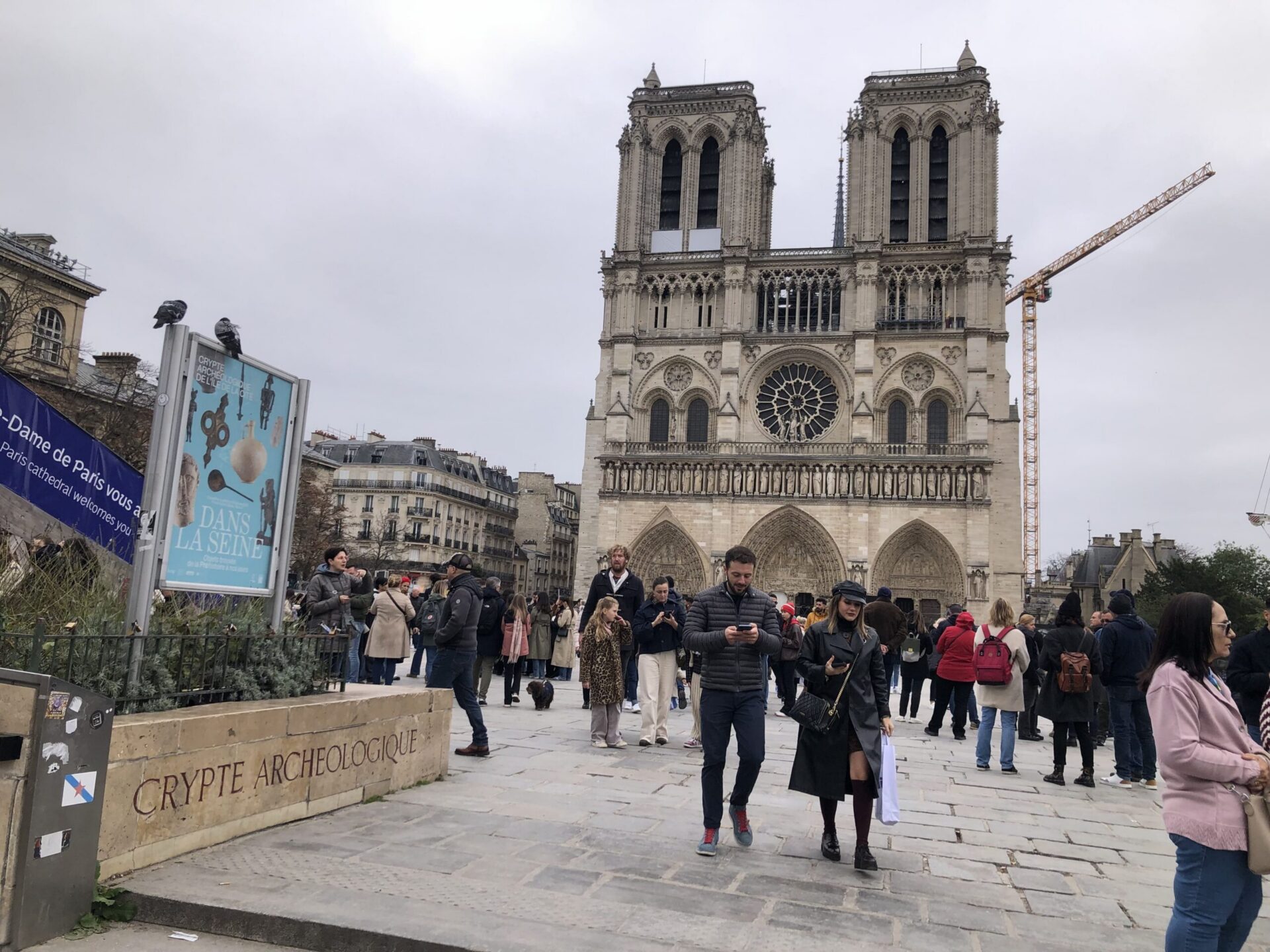
Most people approach Notre-Dame from the Left Bank, crossing one of the bridges with the cathedral slowly coming into view. Take your time here. Let it reveal itself.
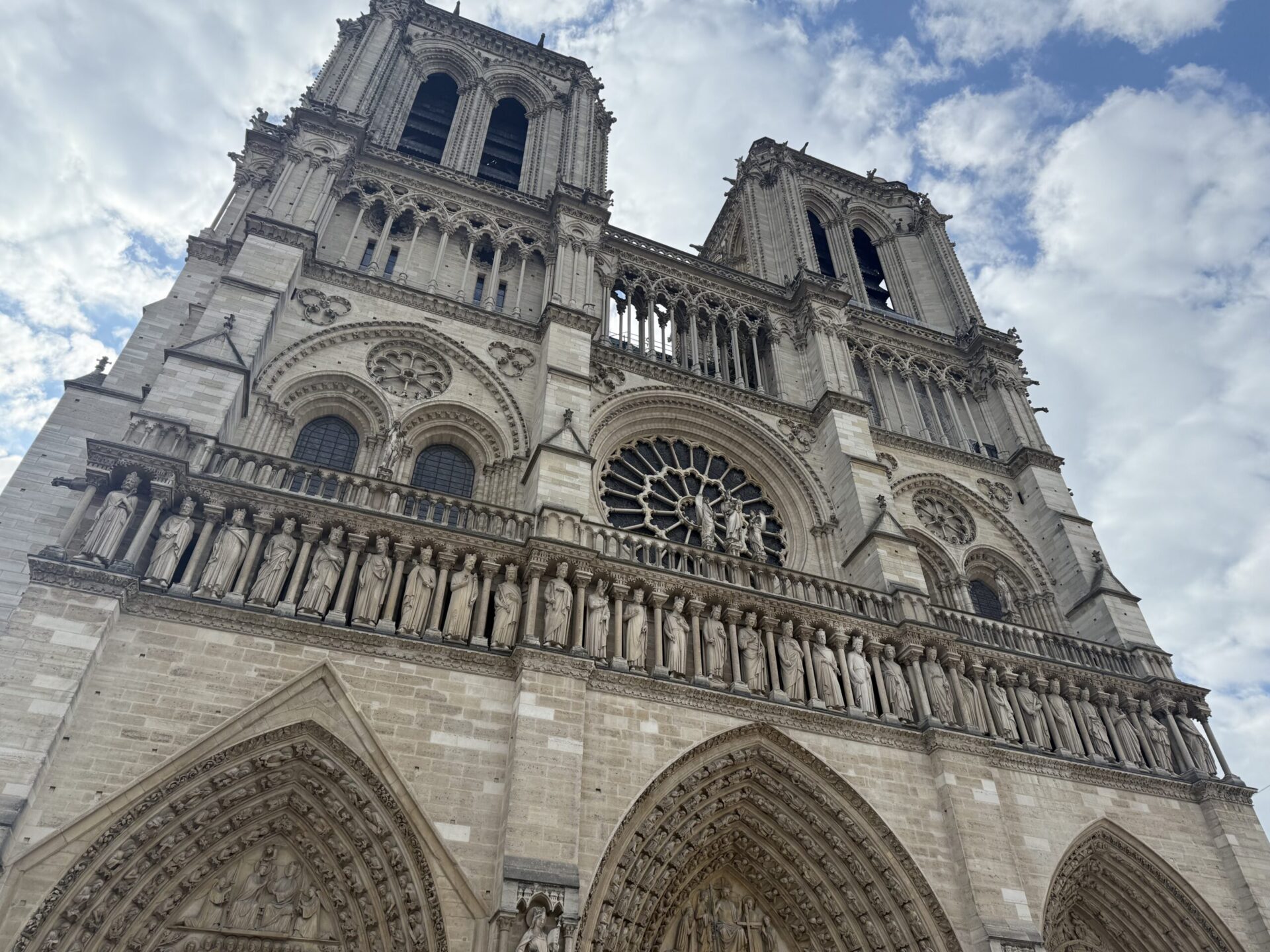
From a distance, the towers feel solid and grounded, almost protective. Up close, the façade is anything but simple. Rows of kings line the Gallery of Kings above the portals. Stone saints stand frozen mid-gesture. Gargoyles peer outward, half-warning, half-watching.
Before stepping inside, walk around the exterior. The eastern end — the apse — is especially peaceful, with flying buttresses stretching like open arms. It’s a reminder that Notre-Dame isn’t just a religious monument; it’s an architectural solution, a medieval answer to the impossible desire to reach heaven using stone.
A Brief Story of Notre-Dame (Without the Lecture)
Construction began in 1163, at a time when Paris was still finding its voice. Over nearly two centuries, generations of builders added layers of meaning, innovation, and faith. What emerged wasn’t just a cathedral, but a statement: Paris belonged among Europe’s great cities.
Over time, Notre-Dame became a silent witness to history. Napoleon crowned himself emperor here. The cathedral suffered neglect and damage during the French Revolution. In the 19th century, Victor Hugo’s novel The Hunchback of Notre-Dame helped save it from decay, reminding the city of what it was about to lose.
And then, in 2019, the world watched as fire tore through the roof and spire. What followed was grief — and resolve. The restoration became a symbol of care, patience, and continuity. Notre-Dame’s story is still being written.
Stepping Inside: What to Notice First
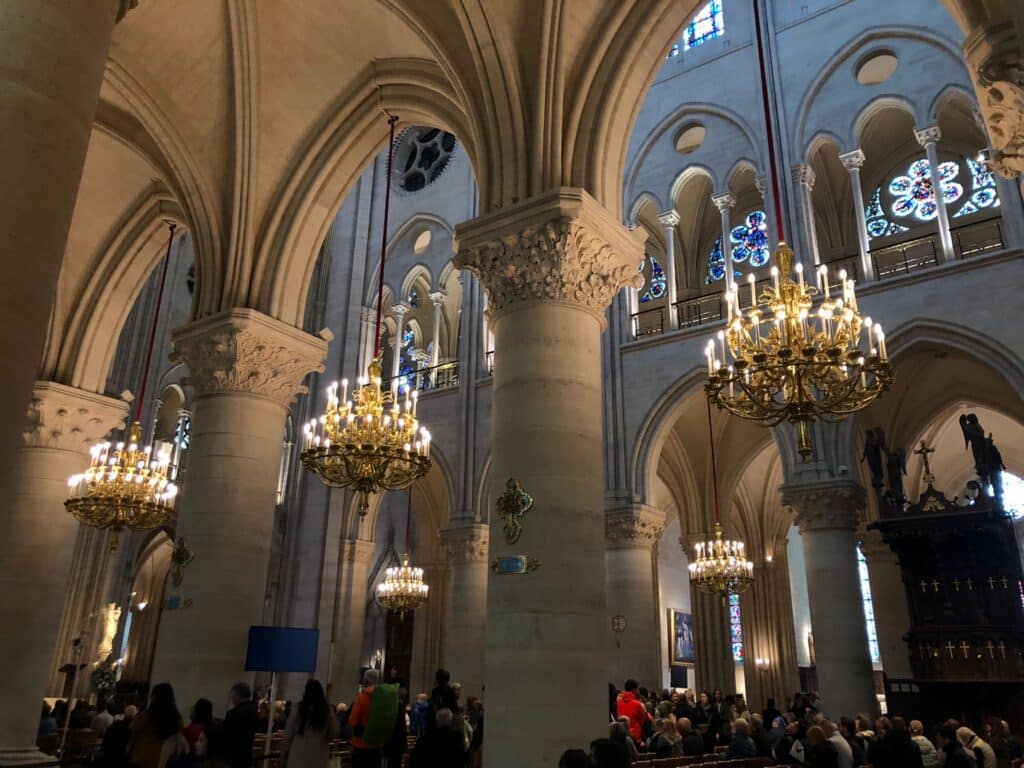
When you enter Notre-Dame, look up — everyone does — but then pause. Let your eyes adjust. The space is taller than it is loud. Light filters in carefully, especially through the rose windows, casting colors that move slowly across the stone floor.
You’ll notice how the interior feels ordered, almost rhythmic. Columns rise, arches follow, and the eye is gently pulled forward toward the altar. Even if you’re not religious, the design encourages reflection.
Pay attention to the details people often miss:
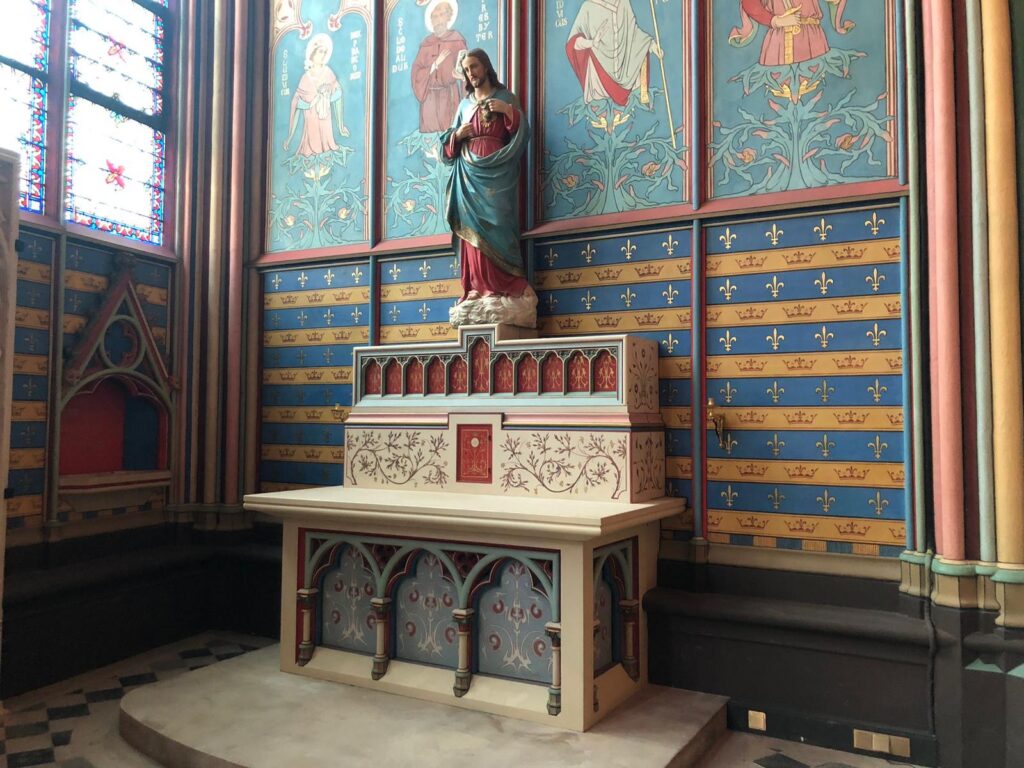
- The quiet side chapels, each with its own mood
- The worn stone beneath your feet, shaped by centuries of visitors
- The way sound behaves — footsteps echo softly, voices drop without being asked
This is one of the reasons Notre-Dame remains so powerful. It doesn’t demand attention. It invites it.
The Rose Windows: Color, Light, and Time
If there’s a single moment that stays with most visitors, it’s standing beneath the rose windows.
There are three — west, north, and south — and each was designed with remarkable mathematical precision. Their circular forms are based on radial symmetry, allowing weight to be evenly distributed through stone tracery while maximizing surface area for glass. This balance between structure and light was a major Gothic innovation, and Notre-Dame remains one of its clearest expressions.
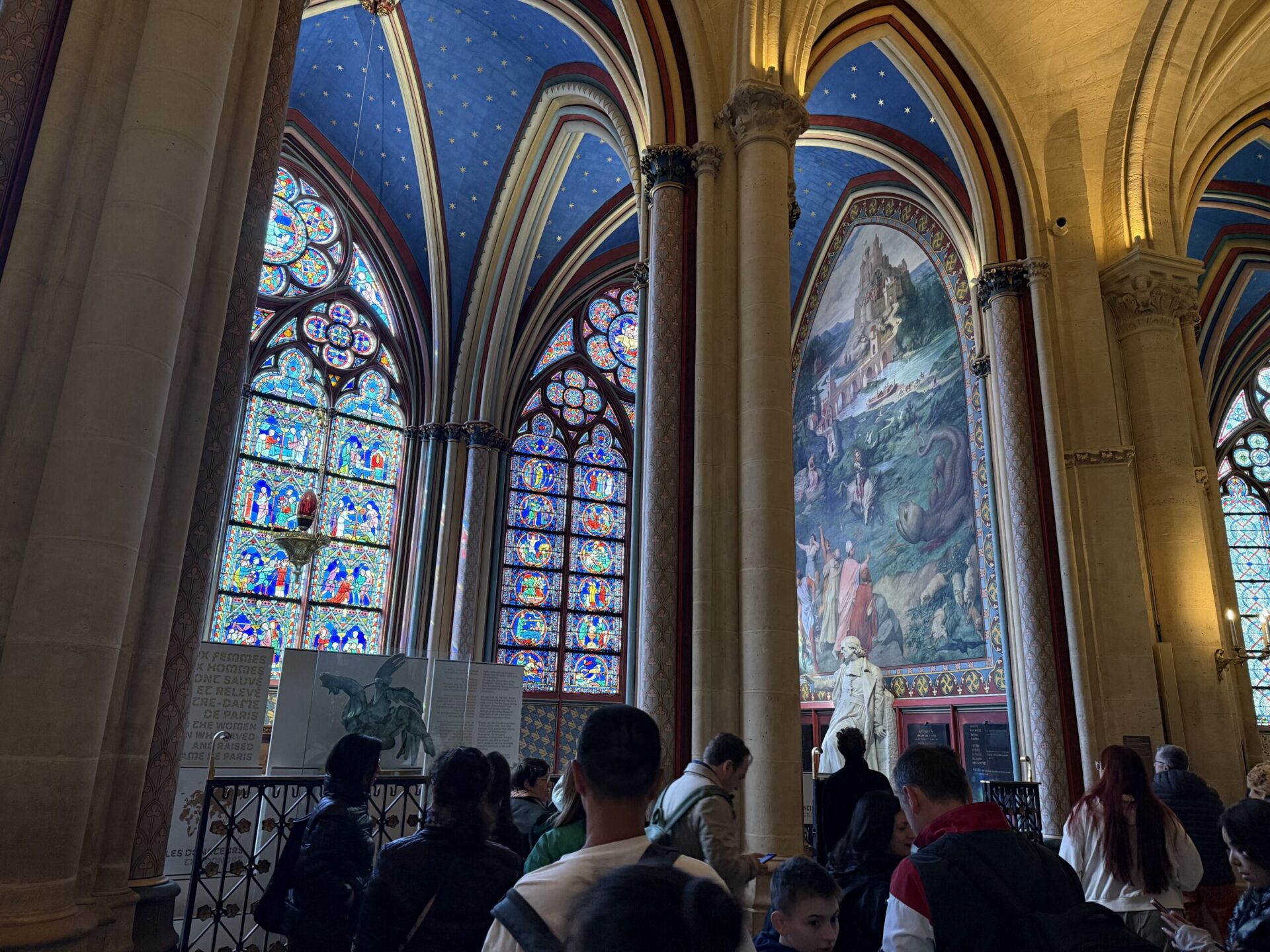
The stained glass itself was made using mineral pigments fused into molten glass, meaning the colors are not painted on, but embedded within the material. This is why the blues, reds, and purples retain such depth even centuries later. As sunlight passes through at different angles throughout the day, the colors shift across the interior, subtly changing the mood of the space.
Practically speaking, the best time to appreciate the rose windows is mid-morning or late afternoon, when the sun is lower and the colors appear more vivid. Take a moment to step back rather than stand directly beneath them — distance allows the full geometry to come into focus.
In a city known for galleries and museums, these windows remind visitors that medieval builders were engineers as much as artists, using light as a carefully calculated element of design.
Practical Tips for Visiting Notre-Dame
A little planning goes a long way, especially with a site as beloved as this one. Here are a couple of practical tips for just the occasion:
When to visit: Early morning or later in the afternoon tends to be calmer. Weekdays are generally quieter than weekends.
What to wear: This is still an active place of worship. Modest clothing is appreciated — covered shoulders and respectful attire help maintain the atmosphere.
How long to allow: Give yourself at least 45 minutes inside. More if you enjoy sitting, observing, and letting the space speak.
Photography: Photos are allowed, but flash is discouraged. Sometimes, the best souvenir is simply being present.
Notre-Dame and the City Around It
Part of what makes Notre-Dame special is its relationship with the city that surrounds it. Geographically, the cathedral sits at what is often considered the historical center of Paris – a point from which distances to other parts of France are measured. This alone speaks to its symbolic importance.
Step outside and you’re immediately back in the movement of the city, but the area around Notre-Dame encourages lingering. Walking paths along the Seine offer clear sightlines of the cathedral’s exterior, especially its eastern end, where the flying buttresses are easiest to observe. These exterior supports weren’t decorative additions; they were a structural solution that allowed the walls to rise higher and hold larger windows.
For a practical pause, the nearby square and riverbanks provide places to sit and reflect after your visit. The famous green bouquiniste bookstalls nearby are more than picturesque – they continue a centuries-old tradition of literary exchange along the river.
If time allows, cross over to Île Saint-Louis just behind the cathedral. The streets there are quieter, more residential, and offer a contrast that helps place Notre-Dame within the living city rather than apart from it. Experiencing the cathedral both from within and from its surrounding neighborhoods gives a fuller understanding of how it has always functioned — not as an isolated monument, but as a daily presence in Parisian life.
Why Notre-Dame Still Matters
In a city overflowing with landmarks, Notre-Dame remains essential not because it’s the biggest or the flashiest, but because it feels human. Built by hands that believed in something larger than themselves, it carries imperfections, revisions, and resilience.
It reminds us that places can be wounded and restored. That beauty can survive disruption. And that history isn’t something locked behind glass — it’s something you walk into, quietly, and carry with you.
Your visit to Notre-Dame doesn’t need to be grand to be meaningful. Stand. Sit. Look. Listen. Let the space do what it has done for centuries.
Paris will still be loud and brilliant when you step back outside. But for a moment, inside those stone walls, time slows — and that may be the greatest gift Notre-Dame has to offer.